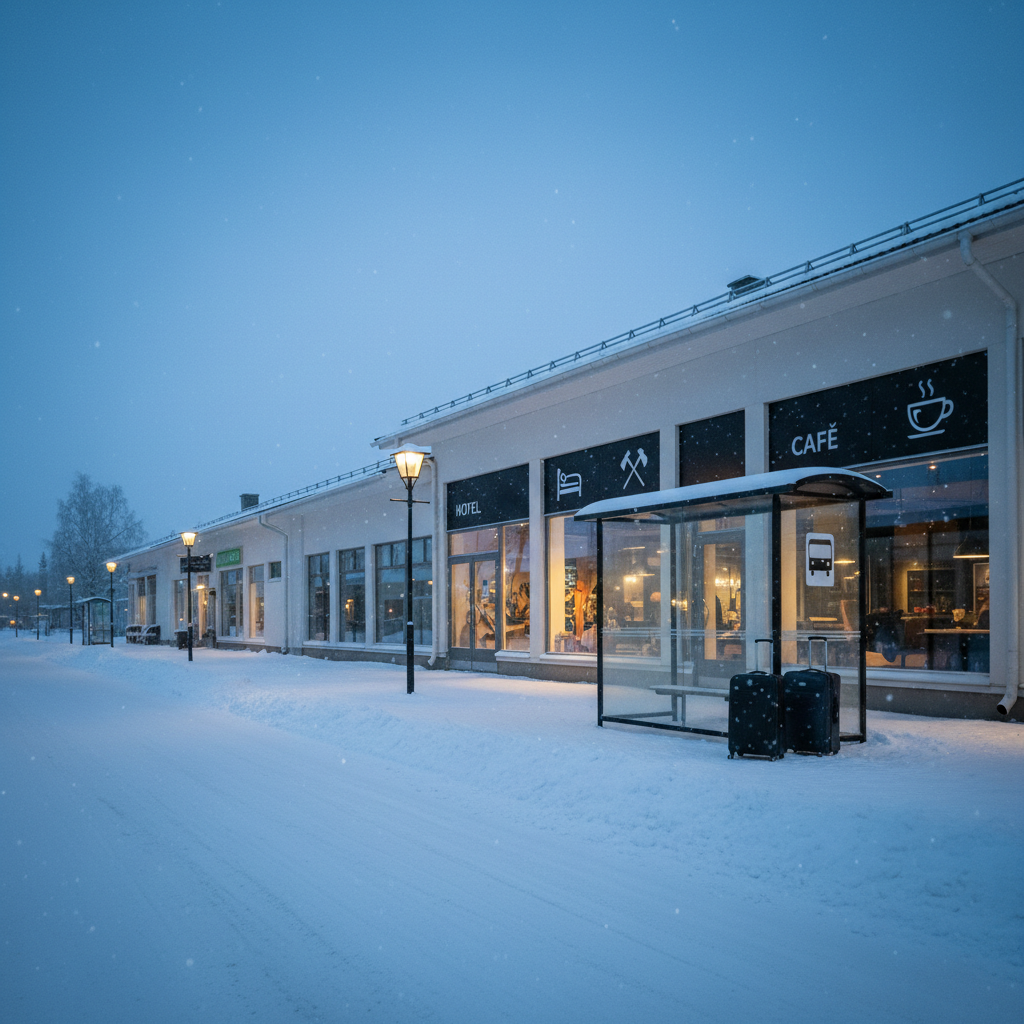
Finnish roads are quiet, well maintained and, in winter, covered in packed snow for months at a time — which Finns treat as completely normal and drive on at eighty kilometres an hour. If you have never driven on ice, Lapland is a gentler place to learn than most: the roads are straight, empty and properly cleared. But there are rules here that do not exist in Israel, and animals that will not move for you.
Your licenceAn Israeli licence is accepted — but carry an IDP for the rental desk
Winter tyresRequired in wintry conditions, 1 Nov – 31 Mar — 3 mm tread minimum
HeadlightsOn at all times, all year
Speed limits30–50 in towns, 80 rural, and lower on motorways in winter
Alcohol0.05% — in practice, do not drink at all
Hit an animal?You are legally required to report it — call 112
Can you drive on an Israeli licence?
Yes. Finland recognises driving licences issued by countries that are party to the international road traffic conventions, and Israel is one of them. Officially you do not need an International Driving Permit or a translation as long as your licence clearly shows its categories and its validity.
Get the IDP anyway. The law is one thing; the person behind the rental counter at Kittilä at eleven at night is another, and many rental companies impose their own requirement for a permit alongside a non-EU licence. It costs very little in Israel and takes minutes. Arriving in Lapland to be told you cannot collect the car is not a problem you can solve locally.
The winter tyre rule, properly explained
Finland’s rule is not a simple date. Between 1 November and 31 March, winter tyres must be used when weather or road conditions require it — and the police decide, case by case, whether conditions required it. The minimum tread depth on the main grooves is 3.0 millimetres for cars. Studded tyres are permitted and widely used in the north.
For a visitor this is mostly academic, because any Finnish rental car will be on proper winter tyres in season. Confirm it when you book — explicitly, in writing — and if you are renting in southern Finland and driving north, say so, because that is a different tyre conversation.
Rules that catch visitors out
- Dipped headlights, always. Day, night, summer, winter. Most modern cars do it automatically; check yours does.
- Clear the whole car before you move. Not a porthole in the windscreen — windows, roof, bonnet and all lights. Snow sliding off a roof onto the car behind is exactly as dangerous as it sounds, and it is an offence.
- Winter washer fluid. Ordinary screenwash freezes solid. Finnish cars carry a low-temperature mix; make sure the rental has some and that you know where the spare bottle is.
- Speed limits drop in winter on motorways and major roads — the same road is signed lower between roughly October and March. Read the signs rather than assuming.
- The alcohol limit is 0.05% and enforcement is serious. One beer with lunch is not worth the risk.
- Those plugs in car parks are engine heaters. In deep cold, cars are plugged in so they will start. If your accommodation offers one, use it.
Reindeer do not move
In Lapland reindeer wander freely, including onto roads, and they have no traffic sense whatsoever. They will stand in your lane and look at you. Three things to know:
- Where there is one, there are more. Slow right down and expect the rest of the herd to follow the first one across.
- Elk are the serious danger. A reindeer will damage your car; an elk — far larger, and most active at dawn and dusk — can kill people. Take the elk warning signs literally.
- If you hit an animal you must report it. This is a legal obligation in Finland, not a courtesy: call 112, mark the spot, and tell the rental company. Reindeer are owned by herders, and the report matters to them as well as to you.
Distance, darkness and fuel
Lapland is emptier than the map suggests. An hour between petrol stations is normal, and some are unstaffed card-only pumps. The habit worth adopting is filling up at half a tank rather than at a quarter — partly for range, partly because a full tank in a stranded car means heating.
In December you will do most of your driving in the dark, on white roads, with snowbanks either side. It is not frightening, but it is tiring in a way daytime driving is not. Break the long transfers, keep the speed sensible, and carry warm clothing in the car even for a short hop — in the Arctic, the clothes you would wear for a taxi ride are not the clothes you want in a stopped car.
And if none of this appeals, you do not have to drive at all. Most of the providers we list will collect you, and the night train from Helsinki will carry your car north while you sleep. If you do want your own wheels, see our car and campervan rental page.
Rules checked in August 2026 against Finnish Transport and Communications Agency and Finnish police guidance. Traffic law changes — confirm current requirements before you drive, and read your rental agreement.